
Every time I hear about another Ramayana film being made, I find myself asking the same question: Why?
Why are we so determined to tell the same story on the big screen again and again when there is so much left to explore, imagine, create, and write about?
Before anyone misunderstands me, let me clarify something. This is not a criticism of the Ramayana. Quite the opposite. The Ramayana is one of the most cherished epics in our culture. It is not just a story that someone wrote centuries ago. It is faith, heritage, values, emotions, family traditions, and deeply personal sentiments for millions of people.
And perhaps that is exactly why I find myself questioning the constant need to turn it into another cinematic project.
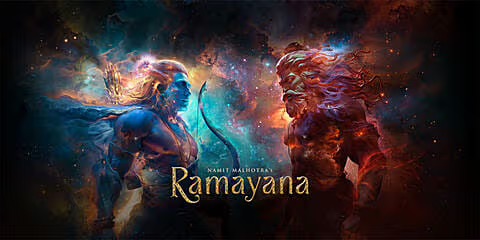
We Have Heard the Ramayana Story. Many Times.
Most of us grew up listening to the Ramayana. We watched it on television, read versions of it in books, heard stories from our grandparents, attended Ramlilas, and grew up recognising its characters and their significance.
For many families, watching the Ramayana was almost a ritual. We know the story of Lord Rama, Sita, Lakshmana, Hanuman, Ravana, and the journey that eventually leads to the victory of good over evil.
Different generations have experienced different adaptations. Some of us remember the iconic television series, while younger audiences have encountered the epic through animated films, television shows, books, and newer cinematic interpretations.
So, when another Ramayana movie is announced, I cannot help but wonder what exactly we are hoping to discover this time.
Is there something new to tell? Is there a perspective we have never explored? Is there an interpretation that adds a meaningful dimension to the epic?
Or are we simply revisiting a familiar story because it comes with an already established audience?
These are genuine questions, and I believe we should be able to ask them without being accused of disrespecting our culture.
The Ramayana Is Not Just Another Commercial Story
Here is where I feel the conversation becomes more important.
The Ramayana is not comparable to an ordinary fictional story that can be adapted, rebooted, remade, and released every few years without much emotional consequence.
For millions of people, these characters are not merely cinematic characters. They represent faith and devotion. Their stories are woven into religious practices, childhood memories, family values, and cultural identity.
That comes with a certain responsibility.
When filmmakers decide to adapt religious scriptures, they are not simply working with an interesting plot. They are engaging with something that holds immense emotional and spiritual significance for an audience.
Of course, artistic interpretation is important. Cinema should have the freedom to explore mythology, question perspectives, and present different creative approaches. But perhaps that freedom should come with an understanding of the sentiments involved.
And if the same epic is being brought to the screen repeatedly, I would hope that each adaptation has something meaningful to contribute.
Better visual effects, bigger sets, expensive costumes, famous actors, and enormous budgets might make a film look spectacular. But do they necessarily make the storytelling more meaningful?
That is something worth thinking about.
Is Nostalgia Becoming a Substitute for Original Storytelling?
Indian cinema has an incredible storytelling heritage.
We have folklore from different regions, forgotten historical personalities, fascinating local legends, indigenous traditions, philosophical ideas, lesser-known literary works, and stories of ordinary people who have done extraordinary things.
There are countless stories waiting to be discovered.
Yet, whenever the industry looks for something grand, culturally significant, and capable of attracting a massive audience, familiar mythological stories seem to become an obvious choice.
I understand why. Established stories have recognition. They already have an emotional connection with audiences. They generate conversations even before a film reaches theatres.
From a commercial perspective, revisiting a popular epic may seem like a calculated decision.
But what about taking a chance on something original?
What about introducing audiences to a forgotten Indian legend? What about telling the story of an extraordinary woman from history? What about exploring the lesser-known philosophies of ancient India through an entirely new cinematic narrative?
Why not create something that becomes iconic enough for another generation to remember?
We often talk about wanting Indian cinema to achieve international recognition. But that requires more than recreating familiar stories with larger budgets. It also requires original ideas, distinctive storytelling, and the courage to experiment.
We Have So Many Stories Beyond the Ramayana
Think about the incredible range of narratives available in Indian literature, mythology, history, and folklore.
There are fascinating stories from the Mahabharata that deserve deeper exploration. There are regional epics, folk heroes, ancient kingdoms, forgotten women warriors, philosophical traditions, and historical events that could become extraordinary films.
Even within Indian mythology, there are countless characters and perspectives that audiences may not know much about.
Imagine a beautifully researched film exploring a lesser-known character from an ancient epic. Imagine a cinematic universe inspired by regional folklore. Imagine stories rooted in Indian philosophy but presented through contemporary storytelling.
We don’t necessarily have to abandon our traditional narratives to create something new. We can draw inspiration from our cultural heritage without repeatedly reproducing the same familiar storyline.
There is a difference between preserving a story and constantly remaking it.
And there is an even bigger difference between retelling something familiar and offering audiences a genuinely fresh experience.
I Haven’t Felt the Urge to Watch the New Ramayana Adaptations
I want to make something clear here. I haven’t watched the recent Ramayana adaptations, and I am not writing this article to review their performances, direction, visual effects, or cinematic quality.
My question is about the larger trend itself.
I simply haven’t felt that excitement or curiosity to watch another retelling of a story I have already known for most of my life.
Perhaps someone else feels differently. Perhaps a new generation wants to experience the epic on a massive cinema screen. Perhaps some viewers appreciate seeing familiar characters interpreted by different actors and filmmakers.
And that is absolutely fine.
People should be able to enjoy these films, celebrate them, and connect with them in their own way.
But shouldn’t those of us who question the creative repetition also have room to express our thoughts?
Not wanting to watch another Ramayana movie does not mean not respecting Lord Rama. Questioning the film industry’s creative choices does not mean questioning the importance of the Ramayana.
We need to separate our faith from our expectations of commercial cinema.
Are We Creating Cinema or Simply Selling Nostalgia?
I sometimes wonder whether the attraction of making another Ramayana movie lies partly in the commercial potential of the subject.
A familiar story, a recognisable cultural identity, an established emotional connection, and the possibility of attracting audiences across generations make it an appealing cinematic proposition.
There is nothing inherently wrong with wanting a film to succeed commercially. Cinema is also an industry, and filmmakers invest money, time, and effort into their projects.
But when commercial considerations become the primary reason for repeatedly revisiting the same stories, we risk limiting the possibilities of Indian cinema.
Perhaps the bigger opportunity is to create stories that audiences have never seen before.
Imagine the excitement of discovering a completely new Indian story that connects with people across generations. Imagine a film that introduces international audiences to a lesser-known part of our culture.
Wouldn’t that be equally valuable?
We should be building a culture of storytelling where originality is celebrated as much as familiarity.
Respecting Our Scriptures Also Means Understanding Their Significance
I believe our religious scriptures deserve more than being treated as convenient sources of cinematic content.
They deserve research, understanding, sensitivity, and thoughtful interpretation.
The Ramayana has been told through different regional traditions, languages, performances, and literary interpretations for centuries. Storytelling has always been a way of keeping cultural heritage alive.
So, I am certainly not suggesting that nobody should ever make another Ramayana adaptation.
If a filmmaker has a genuinely fresh perspective, a meaningful interpretation, or a compelling reason to revisit the epic, I understand the creative intention.
But I would love to see the same level of ambition directed towards stories that have not received the attention they deserve.
We have an entire civilisation of stories to explore. Surely, our imagination should not have to keep returning to the same few narratives.
What If We Invested the Same Money and Creativity in New Stories?
Imagine the possibilities if the budgets, production capabilities, research teams, and creative talent involved in large-scale mythological films were also invested in original Indian storytelling.
We could introduce audiences to forgotten kingdoms, extraordinary historical events, regional legends, ancient scientific traditions, philosophical journeys, and characters whose stories deserve a global audience.
We could create films that make people curious about Indian literature, history, architecture, and cultural diversity.
We could tell stories that are deeply Indian in their roots but universal in their emotions.
That is the kind of cinema I would personally love to see.
Not because our old stories have lost their relevance, but because our storytelling potential is so much bigger than what we repeatedly choose to explore.
We Need More Stories, Not Just More Retellings
The Ramayana will always have a place in our hearts. Its significance does not depend on how many times it is adapted for cinema, how much money is spent on its production, or which actor plays Lord Rama.
It has survived generations because of its cultural, spiritual, and philosophical significance.
And perhaps that is why we should be thoughtful about how we bring it to the screen.
I don’t want this to become a debate about whether another Ramayana movie should or should not be made. Filmmakers have the freedom to create, and audiences have the freedom to watch or not watch.
I simply want us to ask a larger question about Indian cinema.
Why are we so comfortable revisiting what we already know when there is so much we haven’t discovered?
Why can’t we create the next great Indian cinematic story instead of constantly returning to familiar ones, like there are other religions and religious scriptures that majority of people are less aware?
Why can’t we give audiences something they have never experienced before?
We don’t have a shortage of stories in India. Perhaps what we need is a little more courage to tell them.
And that, to me, would be a beautiful tribute to our storytelling heritage.