
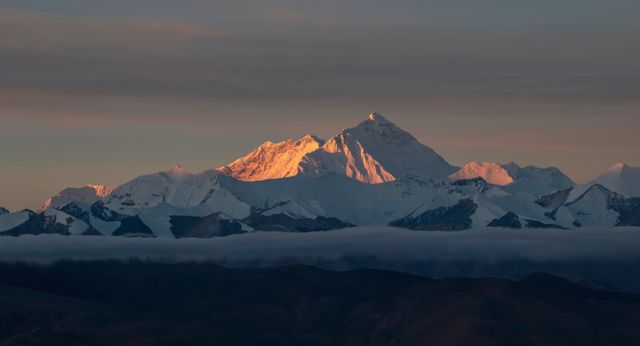
Mount Everest is more than the highest mountain in the world. It is home to glaciers, snow, rare mountain ecosystems and communities that depend on the Himalayan environment. But climate change is changing this iconic landscape, and the effects are becoming increasingly difficult to ignore.
The impact of climate change on Mount Everest can be seen through melting glaciers, changing weather patterns, growing glacial lakes and increasing risks for climbers, trekkers and communities living downstream.
How Is Climate Change Affecting Mount Everest?
The Everest region has experienced significant warming over the past several decades. A review of climate and environmental changes in the region found warming of approximately 0.33°C per decade between 1961 and 2018. At the same time, glaciers have been shrinking and glacial lakes have been expanding.
This may sound like a small temperature change, but at extremely high altitudes, even relatively modest changes can have major consequences.
1. Everest’s Glaciers Are Melting
One of the most visible impacts of climate change on Mount Everest is glacier loss.
Researchers studying 79 glaciers around Mount Everest found that glacier mass loss has accelerated over time. The average rate increased from approximately 0.23 metres water equivalent per year in the 1960s to about 0.38 metres per year during 2009-2018. Ice loss is now occurring even at elevations above 6,000 metres.
This is particularly concerning because glaciers act as natural stores of freshwater.
2. Even Everest’s Highest Glacier Is Losing Ice
You might think that the extreme cold at the top of Mount Everest would protect its glaciers from climate change.
Unfortunately, research suggests otherwise.
Scientists studying the South Col Glacier, located at around 8,000 metres, found significant melting and sublimation. Contemporary thinning rates were estimated to approach around 2 metres of water equivalent per year under the conditions studied. The research suggests that the glacier is extremely sensitive once protective snow cover disappears.
In other words, climate change is reaching even some of the highest and coldest parts of the planet.
3. Glacial Lakes Are Growing
As glaciers melt and retreat, water can collect behind natural dams made of ice and rock, creating or enlarging glacial lakes.
The expansion of glacial lakes is important because some can become unstable. If a natural dam fails, a sudden glacial lake outburst flood, or GLOF, can send large amounts of water downstream.
Researchers have identified increasing glacier melt and changing glacial conditions as factors that can contribute to hazards such as outburst floods and slope failures in the Everest region.
4. Climate Change Can Make Mountaineering More Dangerous
Climate change does not simply mean that Everest becomes warmer. It can also change the conditions climbers have to deal with.
Thinning glaciers, changing snow cover, expanding meltwater ponds and unstable terrain can affect established routes. Research has warned that glacier thinning and the development of surface ponds and glacial lakes could increasingly restrict access to glacier surfaces and affect trekking and mountaineering activities.
For climbers, an unstable mountain means greater uncertainty.
5. Landslides and Other Natural Hazards
A warming and changing mountain environment can influence several interconnected hazards.
Climate-related glacier melt has been associated with concerns about landslides, slope instability, avalanches, flooding and other risks in the Everest watershed. These hazards can affect not only climbers but also trekkers, local residents and infrastructure.
The problem is that these risks do not happen independently. A change in one part of the mountain system can influence another.
6. Water Security Could Be Affected
Himalayan glaciers are an important source of freshwater.
As glaciers lose mass, there can initially be more meltwater flowing downstream. But continued glacier loss can eventually reduce the amount of water stored as ice, creating concerns about future water availability.
The Everest region’s glaciers therefore matter far beyond the mountain itself. Changes in this high-altitude environment can influence downstream ecosystems and communities that depend on Himalayan water resources.
7. Everest’s Fragile Ecosystem Is Under Pressure
Mount Everest and the surrounding Himalayas support fragile ecosystems adapted to extreme conditions.
Climate change can alter temperature, precipitation, snow cover, vegetation and water availability. At the same time, the region faces pressure from tourism, waste and other human activities.
The combination makes conservation particularly important. Scientists have described the Everest region as highly sensitive to climate and environmental change.
8. Tourism Is Also Part of the Conversation
Mount Everest attracts climbers and trekkers from around the world. Tourism provides important income for local communities, but it also creates environmental pressure.
Waste management has been a long-standing issue in the Everest region, although organised cleanup and waste-management programmes have made progress. Climate change adds another layer of pressure to an already fragile environment.
This is why responsible tourism matters. Visitors cannot solve climate change alone, but they can reduce the additional pressure they place on the mountain.
Why Should We Care About Climate Change on Mount Everest?
It is easy to think of climate change as a problem happening somewhere far away. Mount Everest shows why that is not the case.
When glaciers disappear, it is not just a beautiful landscape that changes. Water systems, ecosystems, tourism, local communities and natural hazards can all be affected.
Everest is also a powerful symbol. If warming is changing glaciers at some of the highest elevations on Earth, it tells us something important about the scale of the climate crisis.
What Can We Do?
Protecting Mount Everest requires action at several levels.
Governments and international organisations need to reduce greenhouse gas emissions and strengthen climate adaptation. Scientists need continued monitoring of glaciers, weather and glacial lakes. Tourism authorities and visitors need better waste management and responsible travel practices.
As travellers, we can also make small but meaningful choices:
- Carry reusable water bottles instead of disposable plastic.
- Avoid leaving waste behind.
- Follow designated trekking routes.
- Respect local conservation rules.
- Choose responsible tour operators.
- Reduce unnecessary consumption while travelling.
- Support local communities and conservation initiatives.
- Learn about the environmental impact of high-altitude tourism.
The Future of Mount Everest
Mount Everest will continue to stand tall, but the environment around it is changing.
Scientific studies have documented accelerating glacier loss, warming conditions and expanding glacial lakes in the region. Recent research published in 2026 also shows that glacier vulnerability across the Mount Everest region is highly uneven, with many smaller glaciers facing particularly high vulnerability.
The impact of climate change on Mount Everest is therefore not a distant possibility. It is already visible in the mountain’s ice, water and surrounding landscape.
Everest has survived for millions of years. The question is not whether the mountain itself will disappear. The real question is what kind of Himalayan environment will remain around it for future generations.
And that is something we all have a role in protecting.